THC Detection Research (2021–2026):
What the Latest Science Means for DUI‑Marijuana Enforcement
Key Takeaways
-
A 2021 NIJ‑funded study found no correlation between THC levels in blood, urine, or oral fluid and actual impairment, and confirmed that field sobriety tests do not reliably detect cannabis intoxication.
-
A 2023 DOJ‑funded VCU project began developing a colorimetric THC breathalyzer capable of distinguishing THC from CBD, with the goal of producing rapid, on‑site results.
-
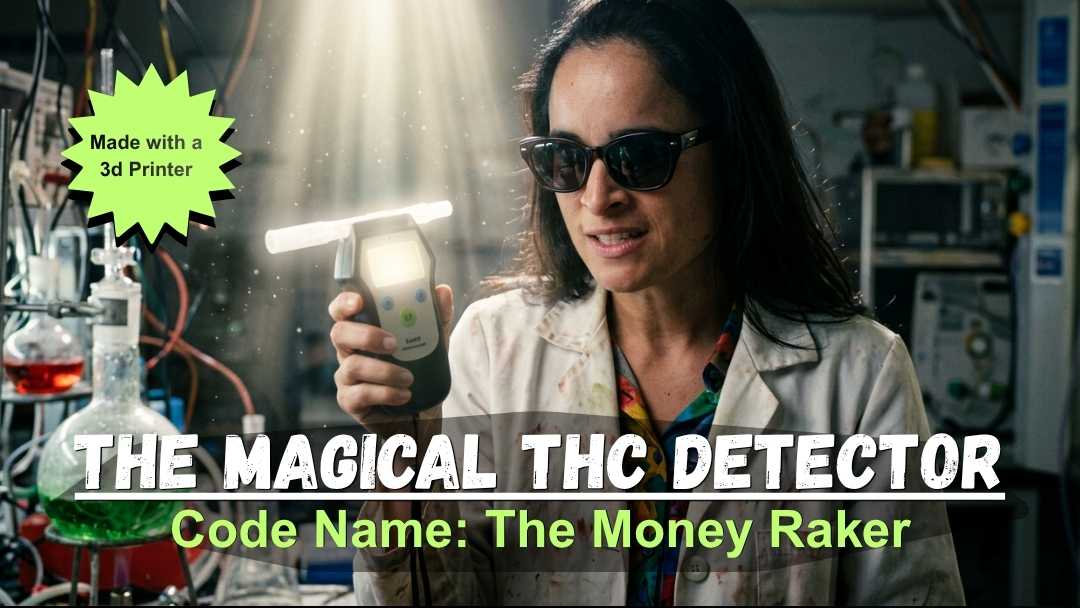
A 2026 DOJ‑funded study demonstrated a 3‑D printed, inhaler‑style THC breathalyzer prototype using Fast Blue dye to detect THC without laboratory analysis.
-
Across all studies, the scientific consensus is clear: current THC enforcement tools are unreliable, and emerging breath‑based technologies may detect recent use but cannot measure impairment.
-
These findings undermine the legal foundation of per se THC limits, SFST‑based arrests, and toxicology‑only prosecutions in DUI‑marijuana cases.
A Combined Legal Analysis of THC Detection Research (2021–2026)
Between 2021 and 2026, three major federally supported research efforts reshaped the national understanding of cannabis‑impaired driving. Each study examined a different aspect of THC detection—biological markers, field sobriety tests, and emerging breath‑based technologies. Together, they reveal a consistent and legally significant theme: the tools law enforcement currently relies on do not reliably measure impairment, and the new tools being developed still cannot bridge that gap.
For defense attorneys, prosecutors, and policymakers, these findings directly affect probable cause, evidentiary reliability, and the future of DUI‑marijuana enforcement.
2021: NIJ Study Confirms THC Levels and Field Sobriety Tests Are Unreliable
Source: National Institute of Justice (April 5, 2021) <https://nij.ojp.gov/topics/articles/field-sobriety-tests-and-thc-levels-unreliable-indicators-marijuana-intoxication>
In April 2021, NIJ‑supported researchers at RTI International published a landmark study evaluating how oral and vaporized cannabis affect cognitive performance, psychomotor skills, THC concentrations in various biofluids, and performance on standardized field sobriety tests (SFSTs).
Key Findings (2021)
-
No correlation existed between THC levels and impairment.
-
SFSTs failed to detect cannabis intoxication in all participants.
-
Impairment varied significantly based on dose and route of administration.
-
Participants often showed significant impairment with low THC levels, and vice versa.
Legal impact: This research undermines the scientific basis for per se THC limits and challenges the reliability of SFST‑based arrests in cannabis cases.
2023: VCU Begins Developing a Selective THC Breathalyzer
Source: VCU News (August 25, 2023) <https://news.vcu.edu/article/2023/08/vcu-forensic-science-professor-hopes-a-better-thc-breathalyzer-will-increase-road-safety>
In August 2023, VCU forensic toxicologist Dr. Emanuele Alves announced a DOJ‑funded project to create a rapid, on‑site THC breathalyzer capable of distinguishing THC from CBD—something existing devices cannot do.
Key Findings (2023)
-
Existing THC breathalyzers are collection devices, not analytical tools.
-
Alves’ team developed a colorimetric reaction system that changes color only when THC is present.
-
The device aims to deliver results within minutes, similar to alcohol breathalyzers.
-
A working prototype was projected for 2025.
Legal impact: A selective THC breathalyzer could reduce false positives, but it still cannot measure impairment, only recent use.
2026: DOJ‑Funded Study Demonstrates 3‑D Printed THC Breathalyzer Prototype
Source: Marijuana Moment (April 8, 2026) <https://www.marijuanamoment.net/federally-funded-study-reveals-marijuana-breathalyzer-breakthrough-with-3-d-printed-roadside-tool-able-to-detect-thc/>
By April 2026, Alves’ research advanced significantly. A DOJ‑funded study revealed a portable, low‑cost, 3‑D printed THC breathalyzer prototype resembling an asthma inhaler.
Key Findings (2026)
-
Uses 3‑D printed cartridges and Fast Blue dye to detect THC.
-
Detects 10–100 nanograms of THC, CBD, and CBN.
-
Color‑space modeling distinguishes THC/CBN from CBD.
-
A patent application was filed.
-
The device still requires validation and field testing.
Federal context (2023–2026)
Multiple federal agencies—including NIST, NHTSA, CRS, and DOJ—have repeatedly concluded:
-
THC levels do not correlate with impairment.
-
No scientifically valid per se THC limit exists.
-
Chronic vs. occasional users metabolize THC differently.
-
Breath detection alone cannot reliably indicate recent use, let alone impairment.
Legal impact: Even with technological advances, no device can currently measure cannabis impairment the way alcohol breathalyzers measure BAC.
Combined Legal Implications (2021–2026)
1. Per Se THC Laws Are Scientifically Unsupported
All three studies confirm that THC concentration is not a reliable impairment metric.
2. SFST‑Based Cannabis Arrests Are Vulnerable
NIJ’s 2021 findings show SFSTs do not detect cannabis intoxication.
3. Toxicology Alone Cannot Prove Impairment
Biofluid THC levels reflect presence, not impairment.
4. New Breathalyzer Technologies Detect Use, Not Intoxication
The 2023 and 2026 devices may detect recent use, but cannot quantify functional impairment.
5. Fourth Amendment Challenges Strengthen
If odor is insufficient (People v. Armstrong), and THC levels/SFSTs are unreliable, probable cause becomes more difficult to establish.
Links
- Transportation or possession of usable marihuana. MCL 750.474
- Michigan Regulation and Taxation of Marihuana Act scope and prohibitions (MRTMA). MCL 333.27954
- Municipal ordinances and transportation restrictions. MCL 333.27956
- Michigan OWI Statute – MCL 257.625
- People v Armstrong, — odor of marijuana and probable cause. Michigan Supreme Court
- People v Latz, Mich. Ct. App. (2016) — challenge to MCL 750.474 and interaction with medical‑use law. State Bar of Michigan
- MMMP Patients
- MMMP Caregivers
- MMMP Frequently Asked Questions
- Applications and Forms
- Applications, Amendment Forms and Common Denial Reasons
- Accela Citizen Access (Patient Log In)
FAQs
Q: Can THC breathalyzers prove impairment?
A: No. Current and emerging devices detect recent use, not impairment, and cannot function like alcohol breathalyzers.
Q: Do THC levels in blood or saliva show whether someone is high?
A: According to NIJ (2021) and DOJ research (2023–2026), THC levels do not correlate with impairment.
Q: Are field sobriety tests reliable for marijuana?
A: No. NIJ’s 2021 study found SFSTs failed to detect cannabis intoxication in all participants.
Q: Will new THC breathalyzers change DUI‑marijuana enforcement?
A: They may help identify recent use, but they will not solve the impairment‑measurement problem.
Q: What does this mean for defending DUI‑marijuana cases?
A: Defense counsel can challenge probable cause, SFST reliability, toxicology evidence, per se THC statutes, and the scientific validity of impairment claims.


As always… Follow the money.
More Posts

How Legal Michigan Cannabis Becomes Illegal in Ohio
Or Borders Matter... For years, Michigan residents have grown accustomed to a simple reality:...
Michigan’s 24% cannabis tax is about more than just a really bad idea
Michigan's 24% wholesale cannabis tax is about more than just being a really bad idea. For...

Michigan Flock Cameras – How Your Daily Drive Becomes Police Data
For most drivers, a commute, shopping trip, or visit to another city feels like a private and...

The Michigan Medical Marijuana Program (MMMP)
Michigan Medical Marijuana Program (MMMP)Overview Michigan legalized medical marijuana in 2008...

Ann Arbor’s 2026 Hash Bash Secures Permit
Summary Ann Arbor’s iconic Hash Bash will return to the University of Michigan Diag in 2026 after...

Michigan’s 24% Cannabis Tax Faces Legal Challenge to Road‑Funding Plan
Don't worry the tax money will be used efficently and won't be mismanaged... (April Fools).Summary...